Community Meeting Sparks Conversation About Race
Community Meeting Sparks Conversation About Race
September 30, 2014
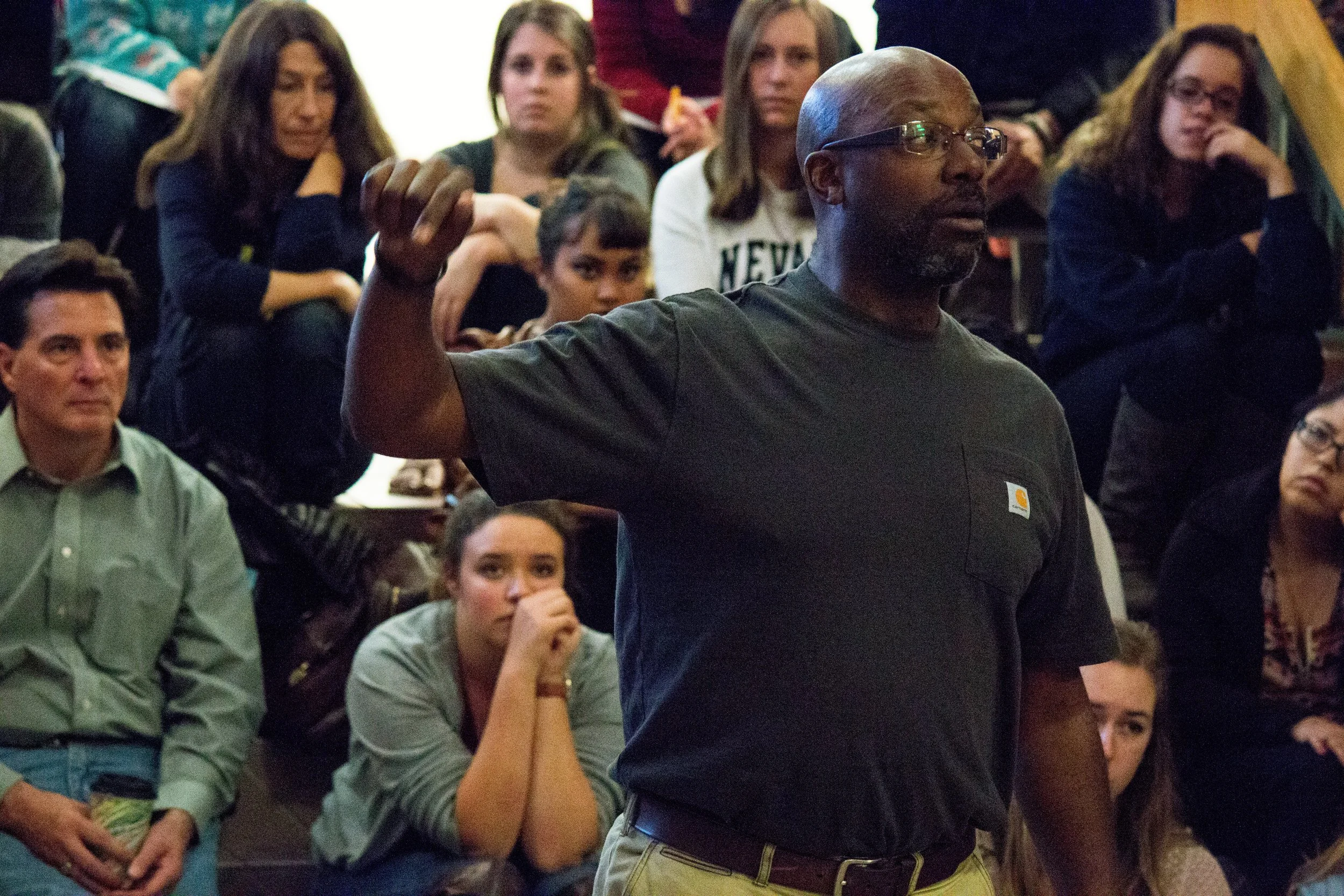
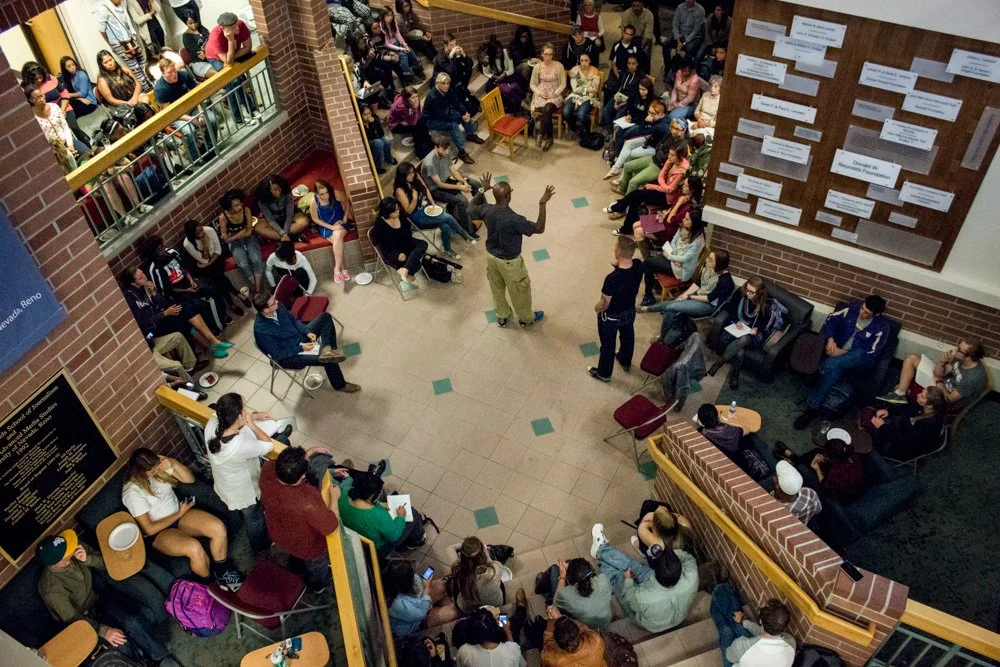
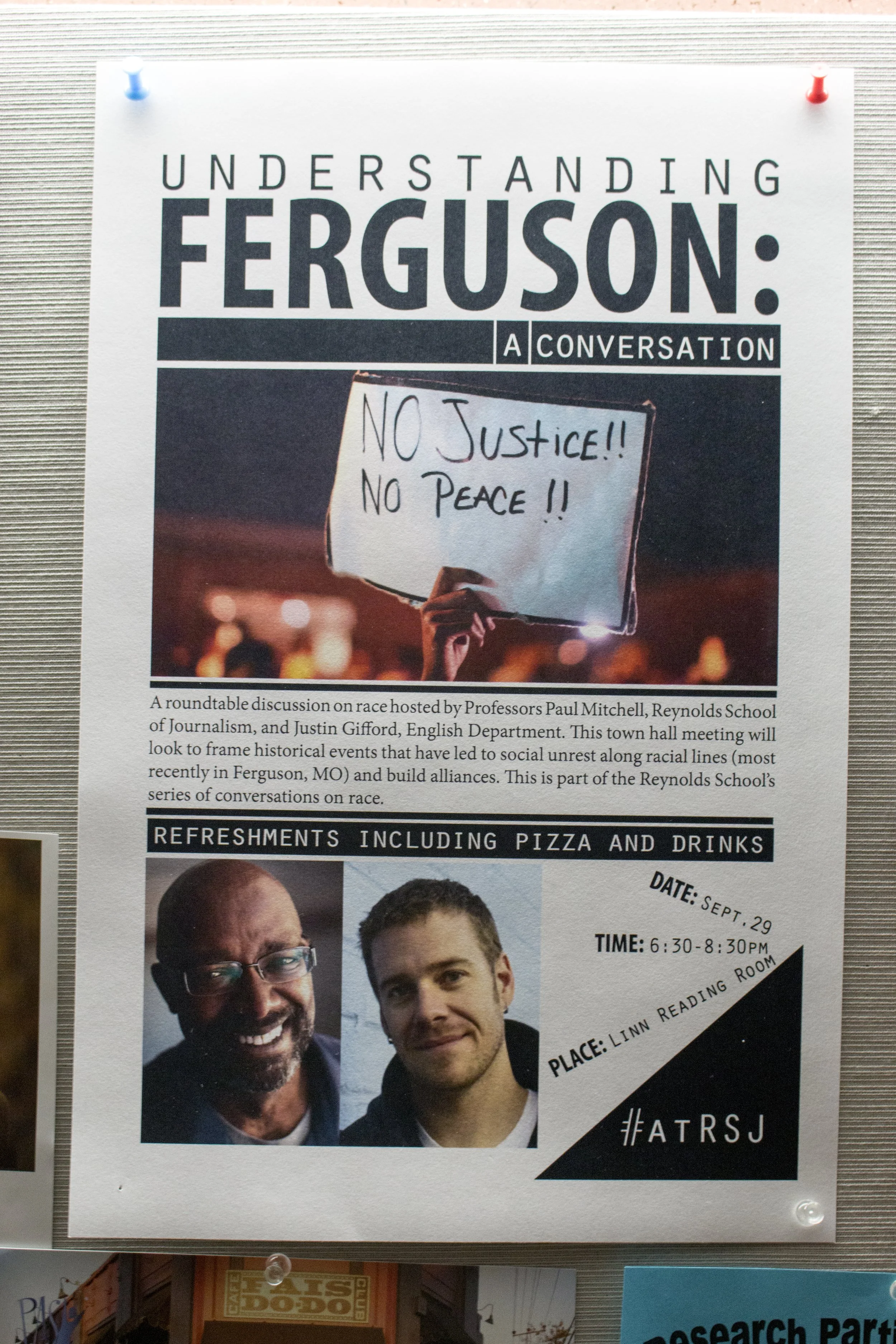
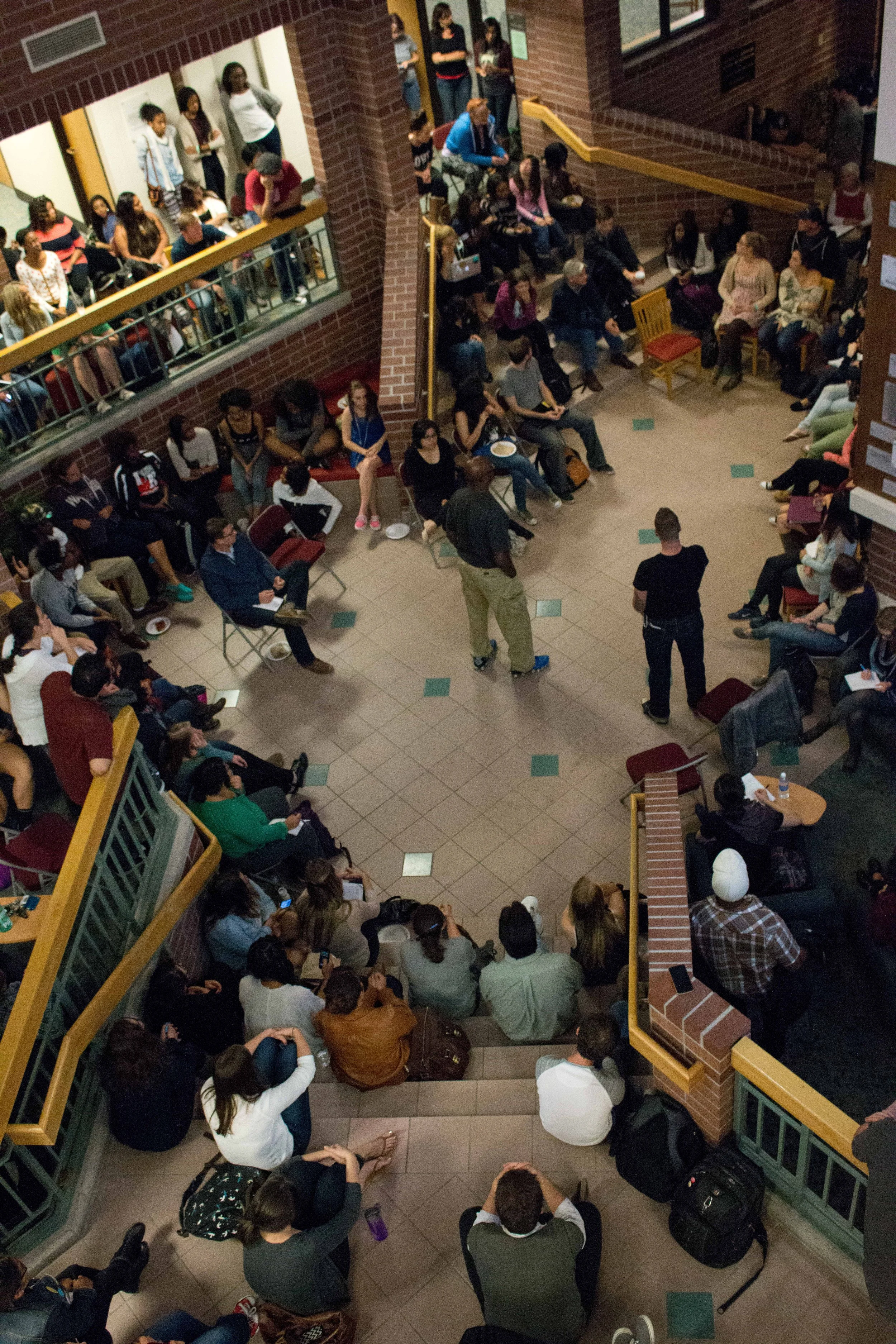
RENO, Nev. – Over a hundred students and community members flooded the Reynolds School of Journalism on the night of September 29 to speak about issues of racial tensions in the United States. The “Understanding Ferguson” town hall discussion, led by professors Paul Mitchell and Justin Gifford of the University of Nevada, Reno, aimed to address historical events and educate students and the community on events that have led to social unrest, such as those recently occurring in Ferguson, Missouri after Michael Brown Jr., an 18-year-old black man, was fatally shot in the back by a white police officer.
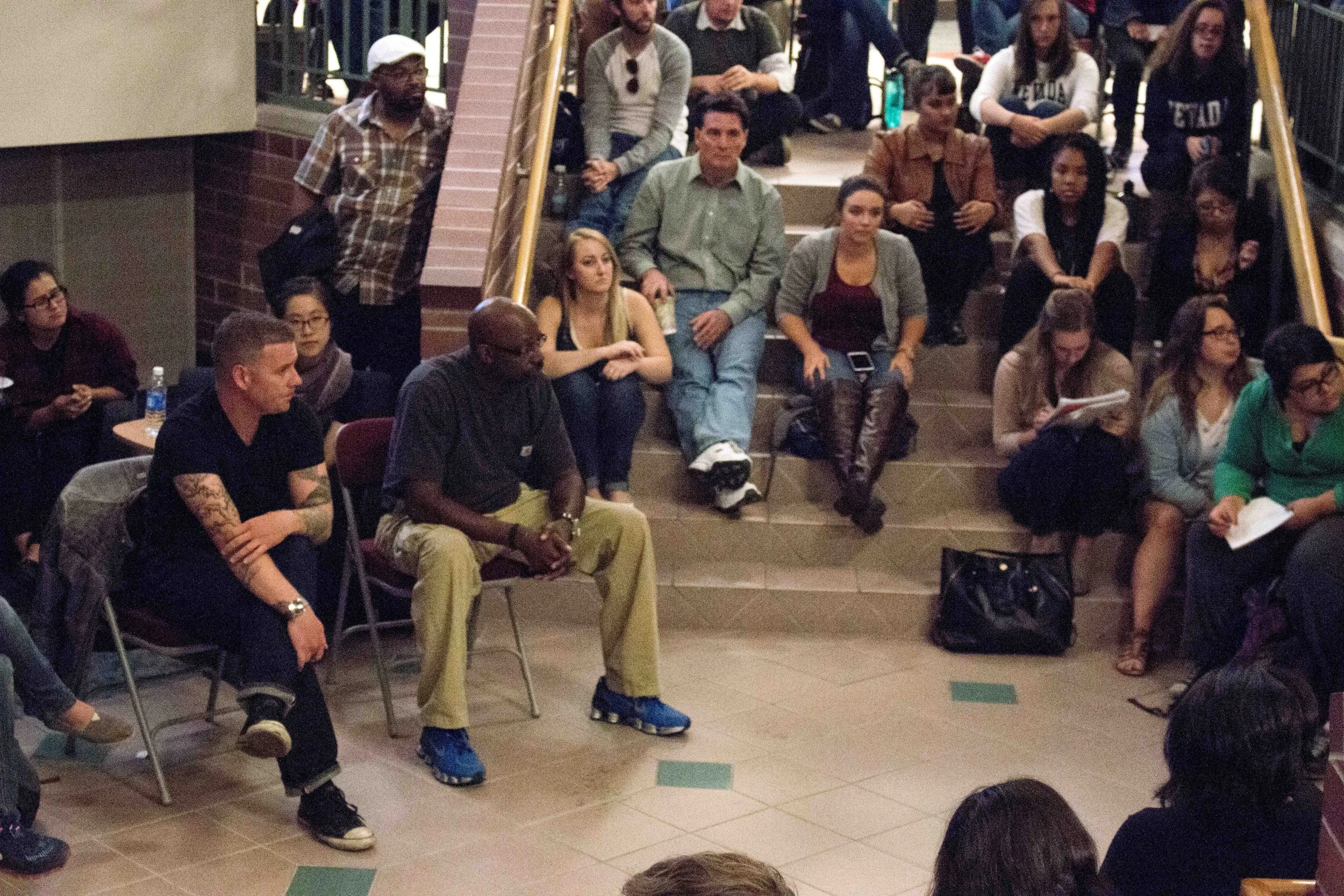
The event was scheduled for 6:30 p.m. on Monday in the Linn Reading room. The expected turnout was 20 or 30 students, lured by free pizza and soda, but the room quickly over-flowed and the crowd took over the main space of the building. Passionate students, faculty and community members of all backgrounds and ethnicities gathered to join in on and be part of the major conversation.
“I was shocked that there were this many people,” said Paul Mitchell, professor of Journalism. “Race and ethnicity aren’t topics broached on this campus. It meant a lot to have this dialogue in this space.”
The two professors each contributed to the opening statements, they spent some time going over a series of historical events that have lead up to today in order to draw connections to modern events, such as those in Ferguson. Their goal was to get students talking about these issues along racial lines and to start addressing them in the community and in their own lives. After their statements, students and other members of the community were encouraged to talk about their own ideas and experiences.
“I was really impressed with the students,” Mitchell said. “What they were saying was really deep and personal. You could tell they were expressing things that they had never articulated in public, especially in front of a crowd this big.”
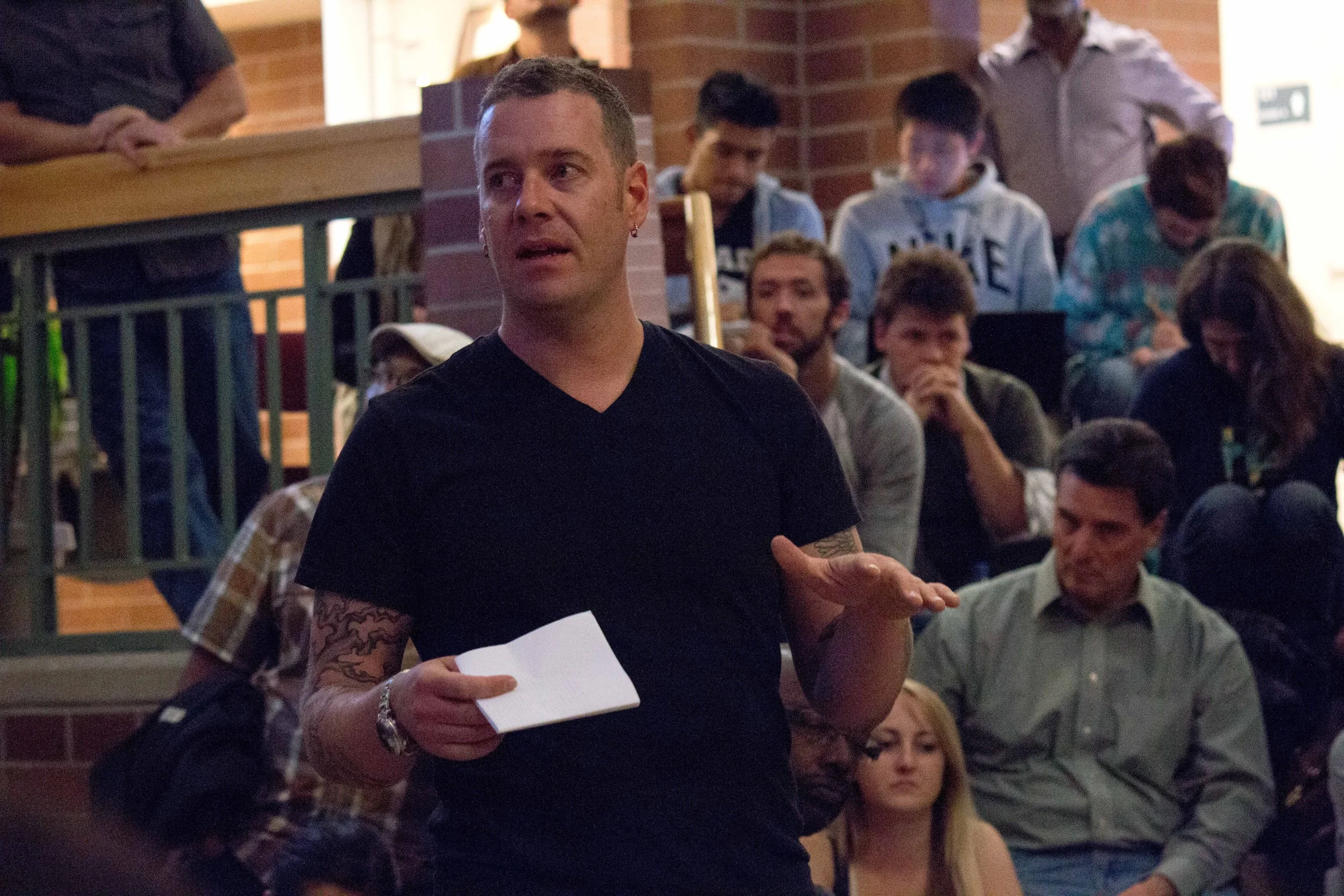
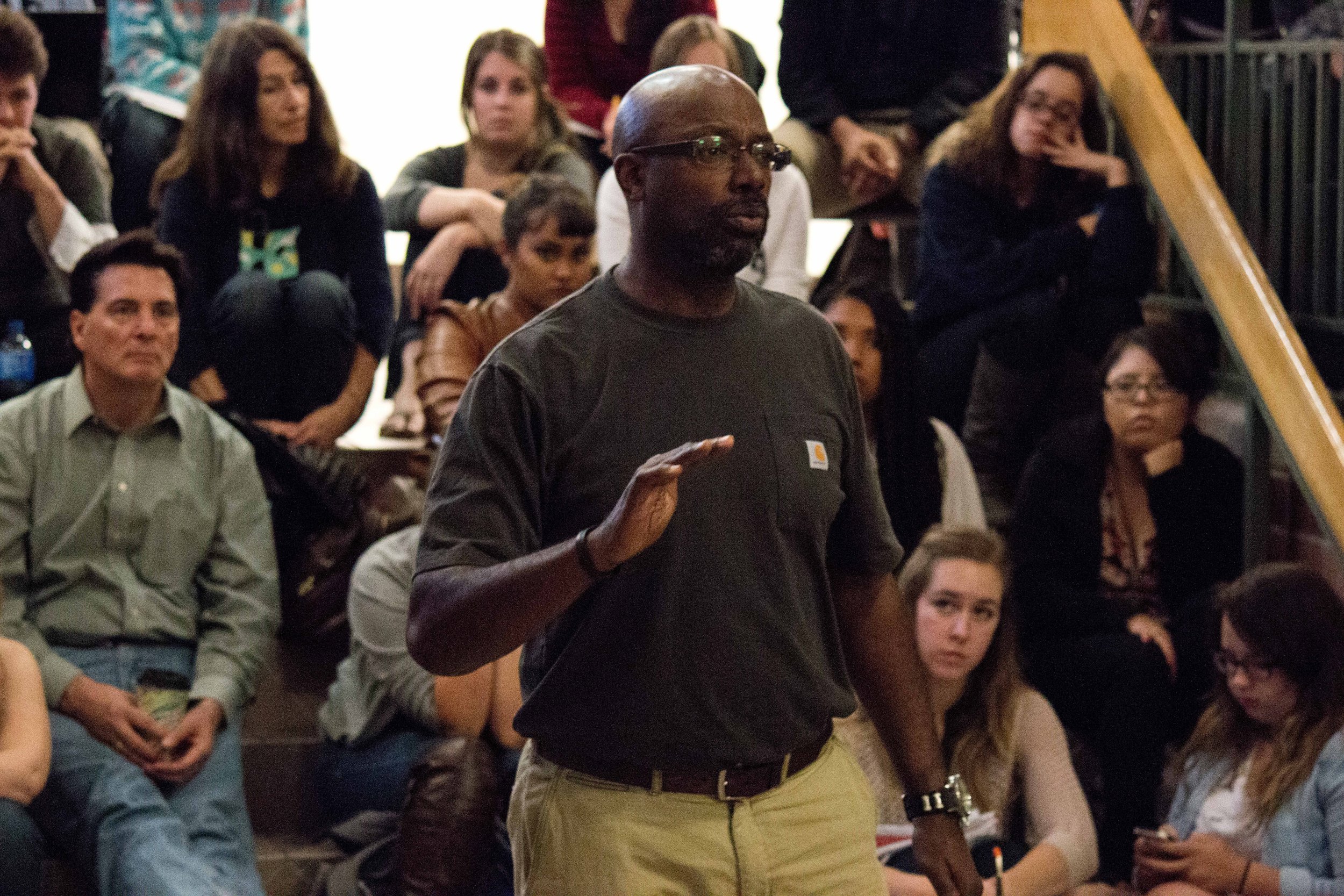
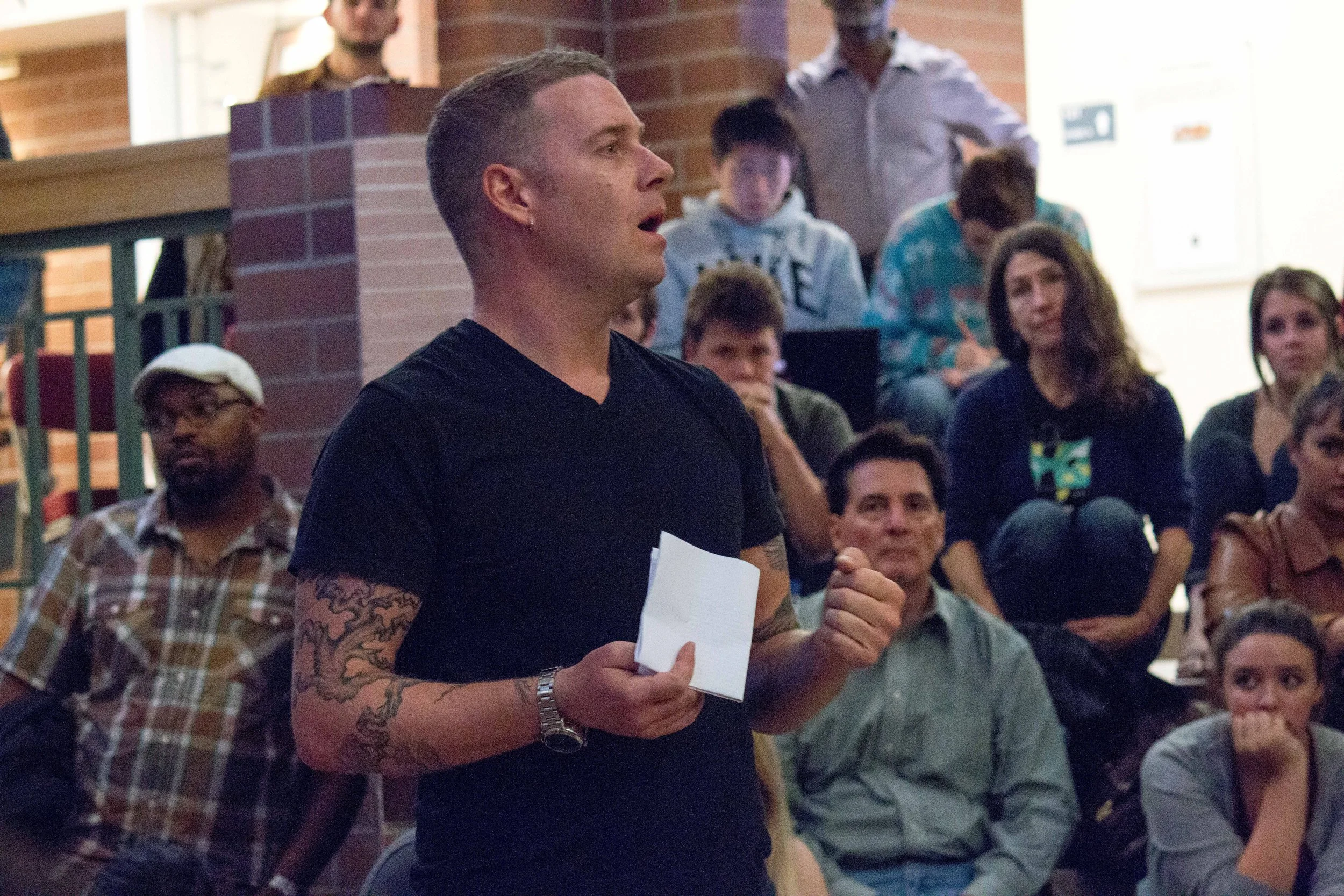
Student after student spoke out about traumatic events and things that they have been taught for years to do differently because of their race. Many African-American students talked about being told since they were children to put their heads down and keep their hands out of their pockets when they saw police. Professor Mitchell described “DWB” or “Driving While Black”, which entails getting pulled over for no apparent reason and then telling the police officer in detail, everything you are currently doing and about to do in order to avoid getting shot or arrested. With each account there was a crowd of students nodding their heads in agreement, expressing that they had similar experiences.
“I thought the students’ responses were expressive of that youthful energy of how to approach and deal with these issues,” said Justin Gifford, professor and scholar of African-American Literature and Culture in the the English department. “Their responses were high-energy and deeply personal.”
Mitchell and Gifford had begun planning a discussion about race in the spring, and then the Ferguson events happened and they knew it was time to have the talk. It was clear on Monday night that the community feels the same way and is ready to make changes.
“I believe that racism isn’t just a black person problem, just like homophobia isn’t just a gay person problem and sexism isn’t a woman problem,” said Devin Williams, 21, a secondary education major at UNR who attended the event. “It is a people problem. The best way to combat racism is first talking about it and then educating yourself and others. It was a great event, it even made me look at things different, a lot of great points were made.”
Mitchell and Gifford are planning another conversation to take place later this semester and another in the spring. The next conversations that they believe need to happen are gender, class, and sexuality. Based on the turnout of the “Understanding Ferguson” event, they would like to hold the next discussion in a larger venue, possibly in a Joe Crowley Student Union ballroom. They hope that these discussions get the attention of school leaders and eventually cause a larger scale discussion and movement.

Photographer based in Munich, Germany